
20B-REW Triple-Rotor Engine History And Technical Specs
The 20B-REW occupies a special place in Mazda’s rotary-engine story. It was the company’s only production three-rotor powerplant, developed for the luxury-focused Eunos Cosmo rather than the lighter RX-7 range. Its 1,962 cc swept capacity, sequential twin-turbocharging and smooth power delivery made it a technically ambitious flagship for the early 1990s.
For enthusiasts, the engine is best understood alongside Mazda’s wider rotary development: the 12A and 13B established the format, while the 20B added another rotor and a more sophisticated induction system. The rotary engine basics reference provides useful background on apex seals, eccentric shafts and displacement calculations before examining this rare Japanese-market engine.
Origins In Mazda’s Rotary Programme
The 20B-REW entered production in 1990 with the launch of the JC-series Eunos Cosmo. Eunos was Mazda’s premium marque in Japan, and the Cosmo was positioned as a refined grand tourer with advanced electronics, leather trim and a high level of standard equipment. The three-rotor model sat above the Cosmo’s 13B-RE engine option.
Production continued until the Eunos Cosmo was discontinued in 1995. Unlike the mass-produced 13B family, the 20B was built in relatively small numbers and was never installed by Mazda in a factory RX-7. That limited application is a major reason complete engines, accessories and original control systems are now difficult to source.
Three Rotors And 1,962 Cc
The 20B uses three 654 cc rotor chambers, giving a nominal total capacity of 1,962 cc. As with other Mazda rotaries, the published displacement does not directly describe the engine’s piston-equivalent capacity. Rotary specifications can therefore look modest beside piston engines, even when the engine delivers strong torque and high specific output.
Its side-port layout was designed for smooth road manners and durable production use rather than the extreme high-rpm character associated with a peripheral-ported competition engine. The additional rotor lengthened the engine assembly and increased cooling, lubrication and exhaust-flow demands, but it also produced an exceptionally smooth power pulse sequence.
The factory compression ratio is generally listed at approximately 9.0:1, with variations in published specifications depending on market documentation. The engine used an aluminium housing and iron rotor housings, an eccentric shaft, three rotors and Mazda’s established oil-injection strategy.
Sequential Twin-Turbocharging
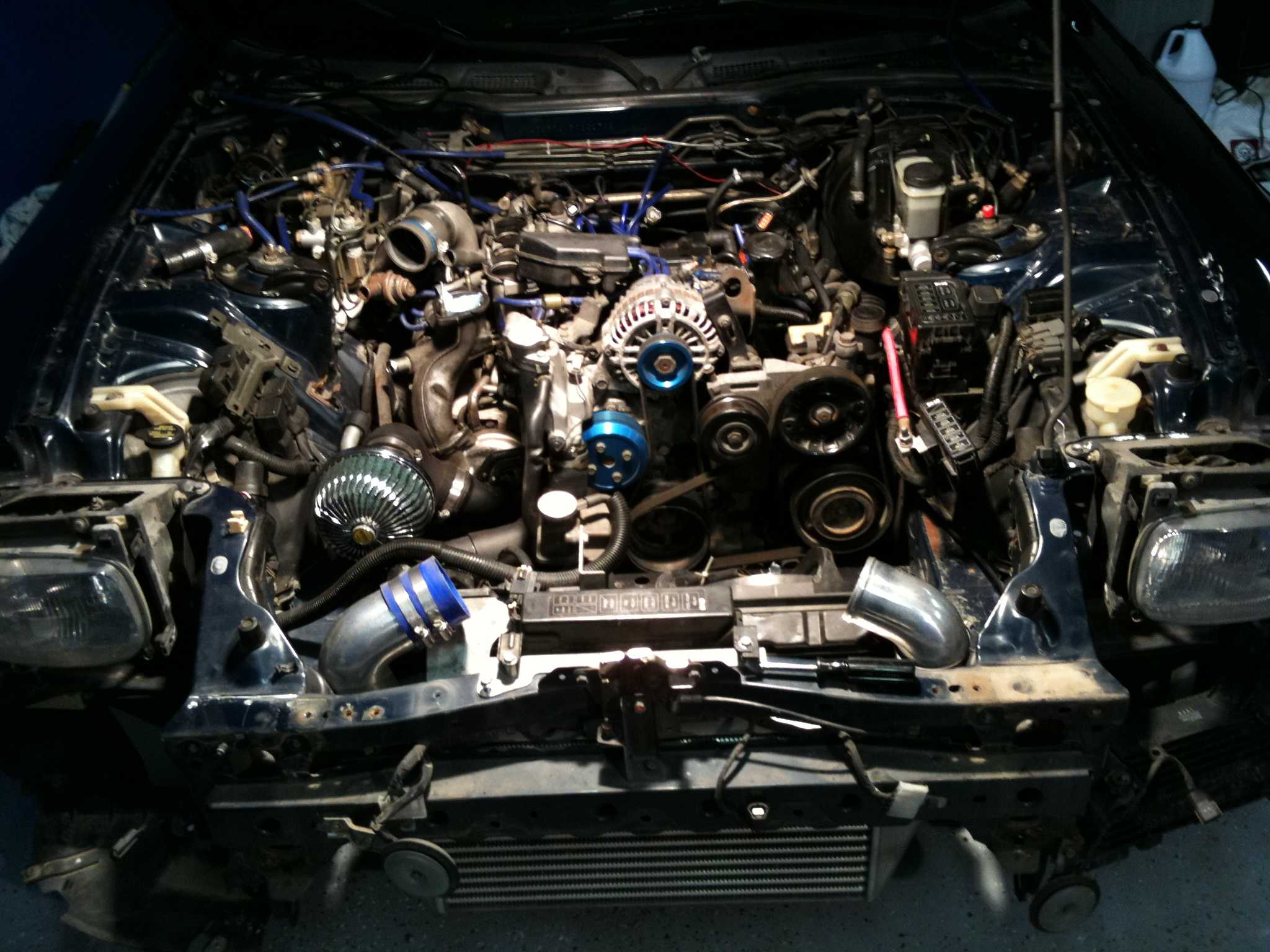
The REW suffix identifies Mazda’s turbocharged, electronically managed rotary configuration. On the 20B, two turbochargers operate through a sequential system intended to combine responsive low-speed operation with stronger airflow at higher engine speeds. This arrangement is more complex than a simple parallel twin-turbo system.
Factory output is commonly quoted at 220 kW, or 300 PS, at approximately 6,500 rpm. Torque is usually listed around 403 Nm at approximately 3,000 rpm. Japanese manufacturers were operating under the period’s voluntary 280 PS output agreement, so published figures do not always tell the full story of the engine’s mechanical potential.
The Cosmo’s automatic transmission, luxury equipment and substantial kerb weight shaped the way the 20B delivered performance. It was engineered as a fast grand tourer, not a stripped-out sports car, meaning factory calibration prioritised refinement, emissions compliance and predictable boost response.
Production History And Rarity
The JC Eunos Cosmo was produced in two main engine configurations: the 13B-RE and the 20B-REW. The three-rotor version was the premium choice and attracted buyers seeking the highest specification available from Mazda. Its complex intake, turbo plumbing, sensors and electronic control modules increased manufacturing cost.
Because the 20B was confined to one model line, there was no large export programme supporting parts supply. Most surviving examples remain in Japan, while imported cars can be found in specialist collections and rotary communities in Australia, New Zealand, the United Kingdom and North America.
In Australia, a 20B Cosmo is an unusual sight at rotary meets in Sydney, Melbourne or Brisbane. Importers must account for vehicle age, compliance requirements, left- or right-hand-drive documentation and state registration rules. Cars arriving through the Japanese used-vehicle market can also need careful inspection for corrosion, accident repairs and missing factory electronics.
Australian Ownership Considerations
Australian owners need to treat the 20B as a specialised import rather than assuming RX-7 parts will transfer directly. Some general rotary components are shared across Mazda families, but the triple-rotor eccentric shaft, housings, intake hardware, exhaust manifolds and engine management system are distinct.
Cooling is especially important in Australia’s warmer regions. A car operating in Perth, Adelaide or inland New South Wales may face higher ambient temperatures and longer periods of heat soak than the same vehicle in a mild Japanese climate. A clean radiator, correctly functioning fans, sound hoses and a properly sealed cooling system are fundamental.
Fuel quality and availability also influence tuning decisions. Many Australian enthusiasts use premium 98 RON petrol where available, although the correct fuel, ignition calibration and boost level depend on the engine’s compression, injectors and management system. A modified 20B should be assessed on a chassis dyno by a tuner familiar with rotary combustion and exhaust-gas temperature control.
Identifying A Genuine 20B-REW
A genuine engine should be verified through its stamped identification, casting details, accessory arrangement and provenance rather than relying on an online advertisement. Rebuilt engines may contain mixed parts, and some conversions use a 20B core with aftermarket turbos, custom manifolds or a standalone ECU.
Australian registration and import paperwork can be just as valuable as the engine number. The SA22C VIN guide explains why chassis identifiers and factory records matter when tracing an imported Mazda, even though the article focuses on an earlier RX-7 platform.
Useful identification checks
- Confirm three rotor housings and the correct eccentric shaft
- Inspect the original sequential turbo plumbing
- Compare engine numbers with import documentation
- Check for 20B-specific intake and sensor hardware
Common condition checks
- Compression-test all rotor faces using rotary-specific equipment
- Inspect coolant seals, oil leaks and housing wear
- Verify injector, airflow-meter and ECU condition
- Review evidence of overheating or detonation
Factory Figures In Context
The comparison below places the 20B-REW beside the better-known 13B-REW. Figures can vary between publications and markets, particularly where Japanese power ratings, rounding and voluntary output limits are involved.
| Specification | 13B-REW | 20B-REW |
|---|---|---|
| Rotors | 2 | 3 |
| Nominal capacity | 1,308 cc | 1,962 cc |
| Factory application | Mazda RX-7 FD | Eunos Cosmo JC |
| Induction | Sequential twin turbo | Sequential twin turbo |
| Common factory output | 206 kW / 280 PS | 220 kW / 300 PS |
| Peak torque | About 294 Nm | About 403 Nm |
| Production period | 1992–2002 | 1990–1995 |
The 20B-REW remains significant because it demonstrates how far Mazda developed the production rotary before emissions rules, cost pressures and changing market priorities ended the programme. Its appeal today is a combination of engineering sophistication, rarity and strong tuning headroom, balanced by expensive parts, limited documentation and demanding thermal management.
For factory manuals, production data and rotary tuning references, explore TurboRX7’s technical library before planning a rebuild or conversion. Careful identification, measured diagnostics and conservative calibration are the best ways to preserve this remarkable three-rotor engine in Australian conditions.