
The Complete Guide to Turbocharging an FD3S RX-7
The FD3S RX-7 already left Hiroshima with one of the most distinctive turbo systems ever fitted to a production sports car. Its 13B-REW uses sequential twin turbochargers, compact packaging and a responsive rotary powerband, yet age, heat and inconsistent maintenance can make a standard car feel far less effective than its original specification.
Turbocharging an FD is therefore less about adding boost blindly and more about building a reliable air, fuel and cooling system around the engine. Australian owners also need to account for fuel quality, summer temperatures, modification rules and the limited local supply of specialist rotary parts.
Understanding The Factory 13B-REW System
The standard FD engine uses two Hitachi turbochargers in a sequential arrangement. The first turbo supplies low-speed response, while the second joins at higher engine speed through a complex set of valves, actuators and control hoses. When operating correctly, this gives the car useful torque without the lag associated with a large single turbo.
Before changing the hardware, verify compression, ignition performance, injector condition, vacuum routing and turbocharger shaft play. A boost leak, damaged wastegate hose or tired air-control valve can imitate poor turbo sizing. Mazda’s rotary layout also rewards careful attention to apex seals, oil metering and intercooler plumbing. The rotary basics reference material is useful for reviewing the engine principles before modifying the intake or exhaust system.
A healthy factory system can support a responsive street build, but the original sequential plumbing becomes difficult to manage at significantly higher power. Many owners eventually choose a single-turbo conversion because it simplifies exhaust routing, wastegate control and engine management. That conversion should be treated as a complete system rather than a turbocharger swap.
Selecting A Turbocharger And Exhaust System
Turbo selection should begin with the intended power range, driving style and fuel. A medium-frame turbo with a modern compressor and efficient turbine is often better suited to an FD used on Sydney or Melbourne roads than an oversized unit designed for a drag car. Excessive turbine size can push boost delivery too far up the rev range, reducing the sharp response that makes the RX-7 enjoyable.
A single-scroll or divided turbine housing, suitable exhaust manifold and correctly sized external wastegate provide more predictable boost control than improvised factory-turbo adaptations. The manifold must clear the strut tower, steering components and bonnet, while the downpipe needs adequate heat shielding. Ceramic coating, turbo blankets and sealed ducting are valuable in Australian summer conditions, especially in traffic around Brisbane or Perth.
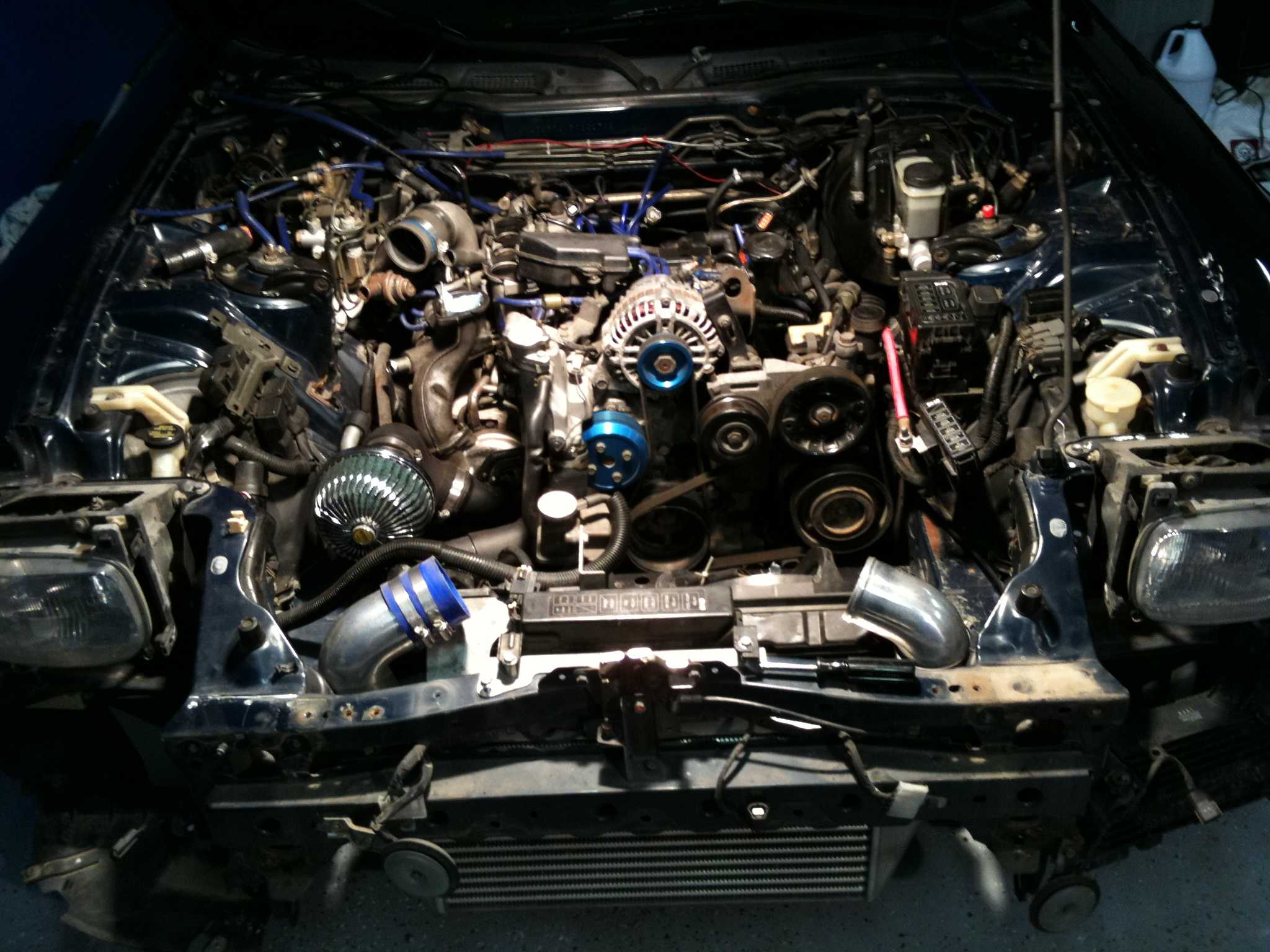
The intercooler should reduce charge temperature without introducing excessive pressure drop. Front-mount systems can work well, although long piping may increase response time and complicate airflow through the radiator. Keep the pipe diameter sensible, use reliable silicone joiners and test every connection under pressure before tuning.
Fuel Delivery And Engine Management
More air requires more fuel, and rotary engines are particularly unforgiving of lean operation or unstable ignition timing. A properly sized fuel pump, clean filters, suitable injectors and a regulator matched to the engine management system form the foundation of a safe installation. The original fuel system may be adequate for a modest upgrade, but its age and wiring should never be assumed away.
A programmable ECU should control fuel, ignition, boost and protection strategies. The FD’s factory ECU can be retained for some carefully limited upgrades, while systems such as PowerFC or modern aftermarket controllers offer broader adjustment. Tune with wideband oxygen feedback, knock monitoring, intake-temperature compensation and exhaust-gas temperature awareness where practical.
Australian owners commonly use 98 RON pump petrol, while E85 can support higher boost and cooler charge temperatures when it is consistently available. Availability varies between cities and regional areas, and ethanol content at a particular station may not suit a fixed tune. A flex-fuel sensor or a conservative petrol map is sensible for cars travelling beyond metropolitan fuel networks.
Porting, Boost And Rotary Reliability
Porting changes how the engine breathes and shifts the balance between low-speed drivability, top-end flow and turbo response. A mild street port can complement a responsive turbo, while a bridgeport or peripheral-port arrangement demands more attention to idle quality, exhaust energy, fuel consumption and noise. The differences between naturally aspirated and turbo rotary combinations are outlined in this 13B engine comparison.
Boost pressure alone is a poor measure of power. Compressor efficiency, turbine backpressure, intake temperature, exhaust flow and ignition timing determine the result. A conservative calibration with stable boost is generally faster and safer than a high-pressure tune that produces detonation or excessive exhaust temperature. Install a quality boost controller only after the wastegate and actuator system are functioning correctly.
Porting should match the intended use. The 13B porting guide explains why a street-port engine and a peripheral-port engine require different expectations. Strong oil control, correct premix or oil-injection strategy, frequent fluid checks and regular compression testing matter more than chasing a headline dyno number.
Cooling, Compliance And Real-World Use
The FD’s compact engine bay generates substantial heat, so radiator capacity, airflow management and oil cooling deserve as much attention as the turbocharger. Use sound ducting around the radiator, inspect the factory oil coolers and avoid allowing the intercooler to block all available cooling air. A coolant temperature gauge, oil-pressure gauge and reliable data logging can reveal problems before they become engine damage.
Australian registration requirements differ between states and territories. Turbo conversions, altered engine management, intercooler placement and emissions-related changes may require inspection, engineering certification or updated registration details. Noise limits and catalytic-converter requirements also apply; a loud external wastegate or catalyst-free exhaust may create legal and practical problems even when the car runs well.
The imported FD market is strongest in enthusiast centres such as Sydney, Melbourne, Brisbane and Perth, but specialist rotary workshops and parts availability vary considerably. Confirm that replacement sensors, seals, injectors and turbo components can be sourced before choosing an uncommon setup. A street car that can be serviced locally is usually more valuable than a technically impressive build that depends on one overseas supplier.
| Turbo approach | Street response | Typical complexity | Best suited to |
|---|---|---|---|
| Refreshed factory sequential twins | Excellent when healthy | High due to control system | Original-feeling road cars |
| Responsive medium single turbo | Strong and predictable | Moderate | Fast street and track use |
| Large single turbo | Later boost, high top-end potential | Moderate to high | Drag or high-power builds |
| Ported engine with matched turbo | Depends on port and turbine choice | High | Purpose-built performance cars |
Practical Recommendations
- Perform a compression, leak-down and vacuum-system inspection before adding boost.
- Decide on a realistic power target before buying the turbocharger or injectors.
- Use a programmable ECU with wideband monitoring and proper engine protection.
- Upgrade cooling, oil control and heat shielding as part of the same project.
- Select fuel and tuning strategies that suit Australian availability and travel distances.
- Check state-based engineering, emissions and noise requirements before modification.
- Keep detailed records of boost pressure, temperatures, fuel pressure and servicing.
A successful FD turbo build combines responsive hardware, stable fuel delivery and disciplined tuning. Start with a healthy 13B-REW, choose components that work together, document every change and have the finished car assessed against the rules in its Australian state. That approach preserves the RX-7’s character while creating a faster, cooler and more dependable machine.