
Factory 20B vs Built 13B: A Practical Identification Guide
Distinguishing a factory 20B from a built 13B can be confusing because engine swaps often look factory-correct, while genuine 20Bs are exceptionally rare. The factory 20B was a 1,996 cc two-rotor engine offered in selected 1986–87-era applications. Most Australian rotary enthusiasts encounter 13Bs instead, many with extensive modifications. A genuine 20B can outperform a basic 13B, but engine capacity alone does not determine power.
Australian-delivered RX-7s are overwhelmingly 13B cars, usually right-hand drive, with many locally sourced examples now approaching 40 years of age. At club meets around Melbourne, Sydney and Brisbane, “factory tub” normally means an original, untouched motor, whereas “built 13B” can describe anything from a mild tune to a fully forged turbo engine. Those labels describe very different machines and should not be used interchangeably.
Start with displacement and lineage
The factory 20B used larger 100 mm-diameter rotors and a 63.5 mm stroke, giving it 1,996 cc. The 13B combined an 85 mm rotor diameter with the same stroke for 1,308 cc. The 20B therefore had substantially greater factory capacity, although that does not automatically make it quicker or better engineered than a modified 13B.
The 13B has been produced in several forms since the early 1970s, including naturally aspirated and factory turbo applications. Many Australian examples began life without forced induction, while turbocharged local cars often received imported or locally fabricated conversions. The factory 20B appeared in North American GXL and Japanese Infini applications and was never a common sight on Australian roads.
Chassis history provides useful context but is not definitive. The TurboRX7 archive includes production specifications, VIN information and factory documentation that can help establish what a particular market car should have contained before any engine changes.
Check the hardware around the engine
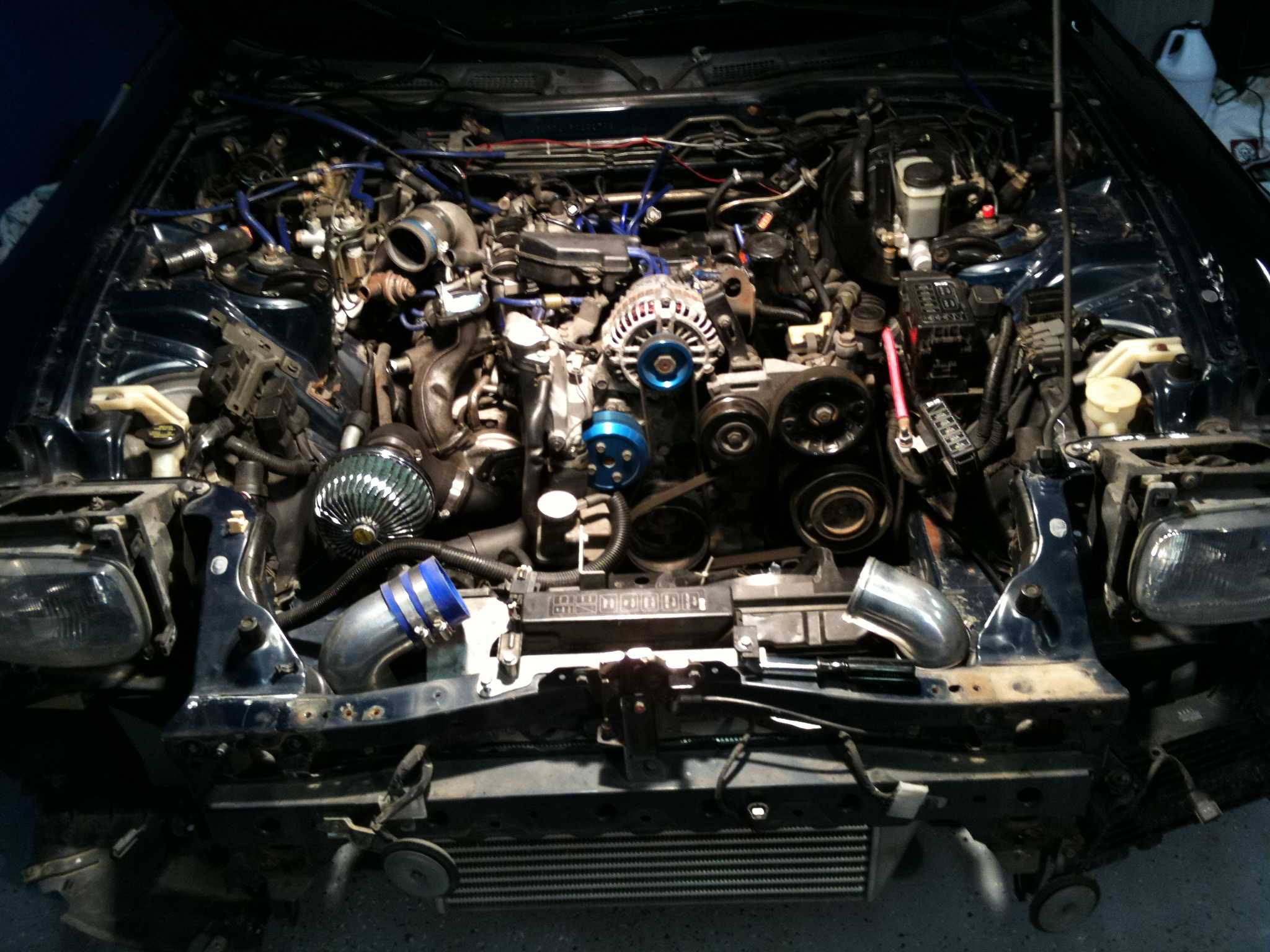
An original 20B should present as a coherent factory installation, including application-specific induction, ignition and management hardware. A converted 13B may have a large aluminium intake manifold, individual throttle bodies, a programmable engine management system, upgraded ignition coils and a prominent turbocharger. Those alterations are not evidence of a 20B.
Look for casting numbers, stamped identifiers and component tags rather than relying on badges, hose colours or the shape of the intake. Buyers should also photograph every accessible engine number and compare the surrounding brackets, wiring and hardware with period references. A 13B swap into a 20B-equipped shell can be professionally finished enough to look convincing.
There is no reliable exterior measurement that reveals the larger 20B rotors. Even the intake tract cannot serve as a simple giveaway, particularly once modifications begin. Understanding rotary engine fundamentals makes it easier to distinguish original components from a mixture of 13B, 20B and aftermarket parts.
Compare factory performance figures
A factory 20B produced approximately 200 to 205 horsepower and 190 Nm, depending on the market and rating convention. Factory 13B output varied much more widely, ranging from roughly 80 horsepower in early naturally aspirated cars to about 135 horsepower in later versions. Factory turbo 13Bs occupied the middle ground, with some markets receiving outputs around 130 horsepower and others receiving versions above 200 horsepower.
These figures describe factory configurations, not the potential of the basic casting. A carefully engineered 13B can surpass a stock 20B in both breathing and power output, while a poorly prepared 13B may perform below the factory 20B despite supporting greater capacity.
Published specifications are therefore only a baseline. For casting layouts and application differences, Sofcase technical references can be cross-checked against the actual engine rather than against a seller’s description.
Understand what a built 13B contains
“Built 13B” is a broad category. It might mean a ported and polished engine with revised ignition and a standalone management system, or it might include forged internals, high-compression rotors, upgraded mains and bearings, stronger oil delivery, balanced rotating parts and forced induction.
Changes to rotating mass also affect how the engine feels. A lightweight flywheel guide explains the installation considerations, including idle quality and clutch compatibility. A lightweight flywheel does not identify the engine, but it can complement a properly balanced 13B.
Final power depends on boost pressure, fuel, ignition timing, exhaust flow and calibration rather than cubic capacity alone. A documented, repeatable tune is generally more meaningful than a quoted horsepower figure copied from an overseas forum post.
Separate originality from performance
A factory-tagged engine may already have been modified, while an apparently stock-looking 13B may have been rebuilt to exceed the original 20B’s output. Engine condition, internal specifications and documented history should be assessed separately from the sales description.
Strong evidence includes matching casting numbers, dated photographs, original tags, management-system part numbers, invoices and a clear rebuild history. Compression and leak-down results can reveal mechanical condition, but they cannot prove displacement because a modified 13B may use the same nominal compression ratio as a 20B.
Service documentation deserves similar scrutiny. This fork-seal replacement procedure concerns another vehicle, but it illustrates why records tied to the exact component and procedure are more useful than a vague claim of recent work. For an Australian used car, rust around the sills, suspension towers and engine bay should be checked alongside mechanical evidence, especially before interstate travel or inspection.
Make the purchase decision
Begin with the engine identity, then examine the installation, internal condition and supporting records. A cold-start video, factory-number photographs, oil analysis, compression results and a leak-down test can expose problems that a warm inspection may conceal. Melbourne and Sydney’s enthusiast scenes provide valuable specialist knowledge, but the same standards apply to rural and interstate purchases.
Confirm any unusual engine combination against factory documentation before accepting the story. Australian buyers should also allow for freight, GST on imported spares and the time involved sourcing discontinued components when comparing prices.
Before committing to the car, record the engine and chassis numbers, photograph every casting and tag, obtain the test results, and place the supporting evidence in the purchase file. Only then release the deposit.